Fuel pumps for the 1996, 1997, 1998, 1999, 2000, 2001 and 2002 4Runner — an in-tank pump listed to the engine, universal in-tank and external pumps, and a fuel management unit for boosted builds. The direct-fit in-tank pump is listed for the 3.4L 5VZ-FE V6; 2.7L trucks use the universal pumps, so check your engine first.
Vortech Standard Fuel Management Unit
The Vortech Standard Fuel Management Unit (FMU) is a proven, high-performance secondary fuel pressure regulator designed specifically in line with your factory...
Walbro 255LPH External Fuel Pump Kit
Upgrade your fuel system with the rock-solid reliability of a worldwide leader in automotive fuel delivery. This genuine Walbro high-pressure external inline fuel...
TI Automotive Walbro In-Tank Fuel Pump |255LPH High-Pressure | Universal
As an industry leader in automotive fuel systems, TI Automotive (Walbro) is trusted by racing teams and performance...
This is a short list on purpose, and the right choice depends on which of these you are doing:
Replacing a tired stock pump on a stock truck — the in-tank pump listed for your engine is the straightforward answer.
Feeding a supercharger, turbo or bigger injectors — you need more volume than stock, and usually a way to raise pressure with boost.
Building a custom fuel system — an external inline pump, mounted near the tank.
Engine matters here. The 3rd gen 4Runner came with a 2.7L 3RZ-FE four-cylinder or a 3.4L 5VZ-FE V6. The direct-fit in-tank pump below is listed for the 5VZ-FE. If yours is the 2.7L, the universal pumps still apply — call us and we will confirm the install before you order.
The Direct-Fit Option
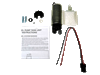
The AEM 340LPH High-Flow In-Tank Fuel Pump for the Toyota 5VZ-FE is the one listed to the engine rather than universally. It is a high-volume in-tank pump intended for performance EFI applications, naturally aspirated or forced induction, and every unit is individually tested before it ships. If you are adding a supercharger to a 3.4L, this is the pump that goes with it.
Universal Pumps
Walbro 255LPH in-tank — high-pressure, flows across a 0-115 psi range. The in-tank route when you are not using the 5VZ-specific unit.
Walbro external inline pump — for custom EFI conversions, secondary booster setups, or anywhere an in-tank install is impractical.
External pumps mount low and close to the tank. They push far better than they pull.
Pressure, Not Just Volume
The Vortech Fuel Management Unit is a secondary regulator that plumbs inline with the factory regulator on the return line. In its 3:1 configuration it raises fuel pressure in proportion to manifold boost, which is what a forced-induction 3.4L needs once the injectors are larger than stock. A bigger pump alone does not do this job.
Tell Us the Build
Give us the year, the engine and what the truck is making — or is about to make — and we will tell you whether you need volume, pressure or both. Filters, senders and the rest of the fuel system are in fuel and air, and the full truck is in the 1996-2002 4Runner catalogue.


 Vortech Standard Fuel Management Unit The Vortech Standard Fuel Management Unit (FMU) is a proven, high-performance secondary fuel pressure regulator designed specifically in line with your factory...$329.99
 Walbro Universal 190 LPH External Inline Fuel Pump Kit Engineered by an industry leader in high-performance fuel delivery, this genuine Walbro 190 LPH High-Pressure External Fuel Pump delivers the...$198.54
 Walbro 255LPH External Fuel Pump Kit Upgrade your fuel system with the rock-solid reliability of a worldwide leader in automotive fuel delivery. This genuine Walbro high-pressure external inline fuel...$187.51
 TI Automotive Walbro In-Tank Fuel Pump |255LPH High-Pressure | Universal As an industry leader in automotive fuel systems, TI Automotive (Walbro) is trusted by racing teams and performance...$176.48

 AEM 340LPH High-Flow In-Tank Fuel Pump | Supercharger Upgrade The AEM High-Flow In-Tank Fuel Pump is the ultimate fueling solution for high-performance EFI vehicles, whether naturally aspirated or...$117.76