Turbo system parts — Garrett turbochargers, external wastegates, blow-off valves, electronic boost controllers, intercoolers and fittings. These are individual components, not a vehicle-specific bolt-on kit, and there is no plug-and-play 4.7L kit on this page; if you are planning forced induction on a 1st gen Tundra, talk to us before buying anything.
T-Bolt Hose Clamp
(You Choose Size)
Our T-Bolt clamps are all 100% Stainless Steel to stand up to all weather conditions to protect against corrosion. Each clamp has rounded smooth band edges to...
1/4" Blue High Pressure Hose
(Fuel or Oil / Teflon Lined / Push-Lok Compatible)
LC Engineering carries all the components you need to build your own turbo kit or service your LC Engineering Kit...
Straight Fitting
(1/8" NPT to -4AN)
LC Engineering carries all the components you need to build your own turbo kit or service your LC Engineering Kit. This fitting is used for the oil feed at the...
Oil Drain Gasket
LC Engineering carries all the components you need to build your own turbo kit or service your LC Engineering Kit. This gasket goes between the turbo and the oil drain plate...
These are individual components, not a vehicle-specific bolt-on kit. The turbochargers here are Garrett units supplied on their own — T-3 flange, four-bolt turbine outlet — and the boost control and intercooler parts are universal. There is no plug-and-play 4.7L kit on this page.
So if you are planning forced induction on a 2000-2006 Tundra, talk to us before you buy anything. We will tell you honestly what is involved, what we can supply off the shelf and what has to be fabricated. That conversation is free and it is a great deal cheaper than a box of parts that do not go together.
Where to Go From Here
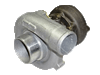
Turbochargers — Garrett ball bearing units, low boost and high boost.
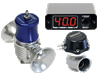
Boost control — the largest section. Wastegates, blow-off valves and electronic boost controllers.
Odds and ends — oil feed fittings, block-off plates, heat insulation and the small parts a turbo install always needs more of than expected.
Turbochargers — Low Boost or High Boost
The Garrett range here splits on how much power you are chasing and how quickly you want it to arrive:
Garrett GT2554R, low boost — the small end of the range. Spools early, built on Garrett's ball bearing cartridge, which runs on a thin oil film that damps out the vibration a journal bearing has to live with.
Garrett T3/T4 Hybrid, high boost, ball bearing — the race unit, and the one with real numbers behind it: a TO4E 50-trim compressor wheel, stage 3 .63 A/R turbine housing and .60 A/R on the compressor side, sized to support 300-500 horsepower.
Bigger is not better. A turbo sized past what the engine and the driving actually need spools late and makes the truck feel worse everywhere below the boost threshold.
Boost Control
The biggest section on the page, and the part people under-budget. External wastegates in 38mm and 40mm, V-band and anodised options, blow-off valves from 38mm dual-port up to 50mm race-port, and electronic boost controllers including a 60mm e-Boost2. A turbo without proper boost control is a timing bomb with a compressor housing.
Intercooling and the Small Parts
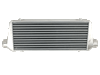
Intercoolers, plus the pieces that make an install finish rather than stall: oil feed fittings, wastegate block-off plates for the LC turbo manifold, turbo rebuild kits and heat insulation.
Before You Spend Anything
Tell us the engine, what the truck is for and what power you are actually after, and we will spec the combination — or tell you if forced induction is the wrong answer for your build. Reach us through our contact page. The rest of the engine section is here, and the full truck is in the 2000-2006 Tundra catalogue.
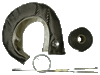
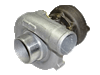
 T-Bolt Hose Clamp (You Choose Size) Our T-Bolt clamps are all 100% Stainless Steel to stand up to all weather conditions to protect against corrosion. Each clamp has rounded smooth band edges to...$7.16
 1/4" Blue High Pressure Hose (Fuel or Oil / Teflon Lined / Push-Lok Compatible) LC Engineering carries all the components you need to build your own turbo kit or service your LC Engineering Kit...$4.65
 Straight Fitting (1/8" NPT to -4AN) LC Engineering carries all the components you need to build your own turbo kit or service your LC Engineering Kit. This fitting is used for the oil feed at the...$4.33
 Oil Drain Gasket LC Engineering carries all the components you need to build your own turbo kit or service your LC Engineering Kit. This gasket goes between the turbo and the oil drain plate...$2.81